Concept Case Study
Uber Flow
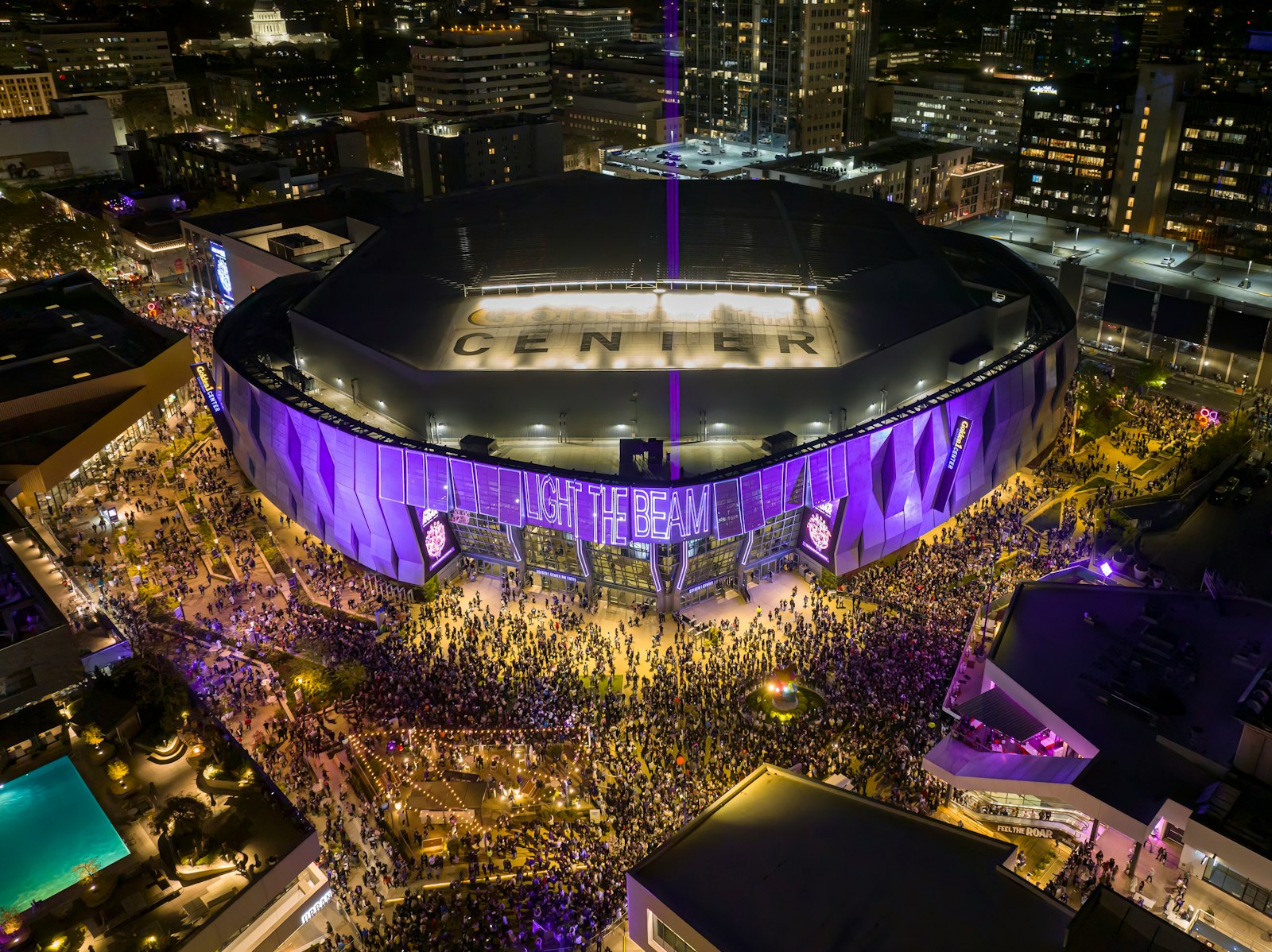
Thousands of riders. One gridlocked block. The last 100 feet of every event ride are broken.
I’ve been stuck in that lot after a concert. This is how I’d fix it if I were the PM.
By Darsh Thakkar · 2026
Act I · The Problem
A $200M+ problem Uber hasn't solved yet.
Mega-events sit at the intersection of three things Uber cares about: a high-frequency dissatisfaction event, a category where Uber is losing share to public transit and walking, and a wedge into a B2B opportunity that the SpotHero and Blacklane acquisitions implicitly point at. Solving this is rare in being both a defensive play and an offensive one.
Order of magnitude: a $200M+ annual incremental revenue opportunity in the US alone.
~150M US mega-event attendances × ~30% rideshare share × ~20% incremental capture × ~$20 incremental revenue per trip ≈ $180M, rounded to $200M+.
Estimated from public-domain inputs (event volume, typical attendance, rideshare share of egress, average fare). Directional — a real pilot would pressure-test this against Uber’s internal data.
Stakeholder
Value when this is solved
- Rider
- Home 20+ min faster, pays less, walks with purpose instead of standing in a dark lot.
- Driver
- No more impossible pickups. Higher earnings per hour. Events become worth working.
- Uber
- Recaptures transit/walking defectors. Unique egress dataset. Wedge into B2B venue mobility.
- Venue
- First real-time egress visibility. Reduces congestion lawsuits and permit risk.
Why now:Public transit ridership at events is recovering post-pandemic. Uber’s recent acquisitions (SpotHero, Blacklane) explicitly point at venue-level mobility but haven’t been activated yet. Competitors haven’t built anything in this space. The window to lead this category is open today.
User Personas
Two sides of the same broken marketplace.
Priya & Diya
Thousands of riders. One parking lot. Zero functioning marketplace.
Rider persona
Meet Priya, the group coordinator.
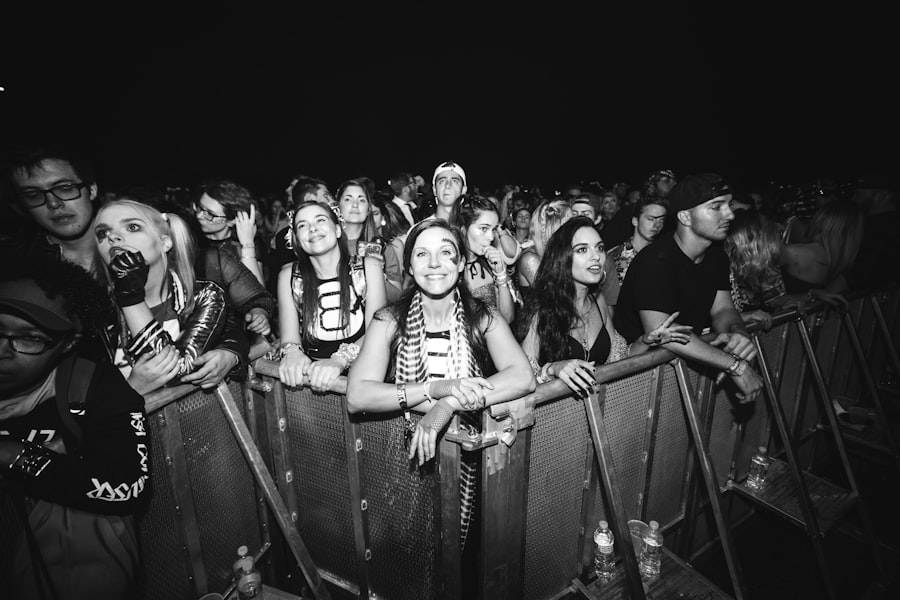
31, product designer in Brooklyn. At MetLife Stadium with her sister Diya for a Bad Bunny concert.
- The situation
- Concert ends 11:20 PM. 42 min ETA, $138 surge. Three rides cancel. ETA climbs to 55 min by midnight.
- Why she's the wedge user
- Highest cognitive load, most motivation to optimize, most willingness to walk if savings are real.
- Holds the phone
- Organized the trip, booked tickets, feels responsible for getting everyone home safely.
- Largest segment
- Group coordinators are the biggest slice of event riders. Convert them, and the group follows.
Driver persona
Meet David, the driver who avoids events entirely.
DDavid (composite persona)
uberpeople.net · Forum Post
“Pax are stupid… they order their ride and then stand in the middle of the busiest crowded center of the cluster wondering why it's taking so long for their Uber to arrive.”
DDavid (composite persona)
r/uberdrivers · Reddit
“Big events are horrible experiences. Traffic is always horrible, customers almost always expect you to drop them off at a door you can't get anywhere near, whatever time Uber tells you the length of the trip is you can basically double it, you never get paid near the value, and lastly the riders will try to convince you of most crazy BS for tips they never intend to give. Waste of time”
- Impossible pickups
- Drivers can't physically reach riders in a gridlocked lot. They circle for 15 minutes, then the rider cancels.
- Earnings collapse
- At events, drivers complete fewer trips per hour because each pickup takes 3 to 4x longer than normal. The math stops working.
- Acceptance-rate risk
- Cancellations from frustrated riders count against the driver's metrics — a penalty for showing up at all.
- Result
- Experienced drivers learn to avoid event zones entirely, which makes the supply shortage worse for everyone.
This isn’t a rider problem or a driver problem. It’s a marketplace problem that hits both sides every weekend at venues across the world.
Marketplace Dynamics
At events, Uber's marketplace stops being a marketplace.
Standard Uber assumes demand arrives gradually — a continuous curve that surge pricing can absorb. At a mega-event the curve is a step function: demand goes from baseline to 100× in four minutes.
Surge pricing just rations who gets a car; it punishes the riders who opened the app first. The real problem is geography — thousands of riders requesting cars from one point is a physical impossibility no amount of supply can solve.
Standard Uber demand
Event egress demand
Same marketplace. Two different physics problems.
Segmentation
Two kinds of events. Same core problem.
Every mega-event breaks the Uber marketplace, but the severity depends on one thing: whether the venue is in a city or out in the middle of nowhere.
Urban events
Stadiums, arenas, street closures, parades
Examples
Yankees Stadium · MSG · UT Football · NYC Marathon · Parades · Street Festivals
What breaks
- Everyone leaves at once — demand goes from zero to thousands in minutes.
- Riders crowd into one pickup area, a physical bottleneck no amount of cars can solve.
- The city grid still works — drivers can get close, they just can’t get in.
The fix is geographic: disperse riders away from the bottleneck so drivers can pick up on working streets nearby.
Remote events
Festivals, outdoor venues, destination events
Examples
Coachella · Stagecoach · COTA F1 · ACL Festival (Austin City Limits, 75K+ daily across two weekends in Zilker Park)
What breaks
- Everything urban events break, plus the roads themselves — often one road in, one road out.
- Limited supply: Drivers must travel long distances to reach remote venues, so fewer are available. Urban events have a larger pool of nearby drivers.
- Coachella 2025: attendees waited up to 12 hours to leave. Organizers publicly apologized.4
Dispersal still helps, but remote events also need venue partnerships and dedicated infrastructure (Phase 2+).
The rider bottleneck is the common thread. Dispersing demand solves it for urban events first, then graduates to remote events once the model is proven.
Problem Definition
The marketplace breaks along five dimensions.
These aren’t isolated UX bugs — they’re structural failures in how the marketplace operates when demand arrives as a step function instead of a curve. Every problem below traces to the same root: the matching engine assumes distributed demand; events produce concentrated demand.
Ranked by Frequency × Severity × Solvability
| Problem | Freq. | Severity | Solvability | Priority |
|---|---|---|---|---|
| Pickup chaos & post-event congestion | High | High | Med | P0 |
| Driver flight from event zones | High | High | Med | P0 |
| Surge price perception | High | Med | Med | P1 |
| Rider fatigue after events | High | Med | Med | P2 |
| Demand step function | High | High | Low | P2 |
| Identification in dense crowds | Med | Low | High | P3 |
Why P0 is a combined row:
Pickup chaos is a direct consequence of post-event congestion. Thousands requesting cars from one gridlocked point creates phantom pursuits, impossible pickups, and cascading cancellations. The congestion causes the chaos — they’re the same problem.
Why identification is P3
In a dense crowd, finding your specific driver is hard — but it’s a low-severity annoyance once the car is actually nearby. The real problem is getting the car nearby in the first place.
Act II · The Insight
Occupied time feels shorter than unoccupied time.
Standing still
Perceived wait
Time stretches.
Walking with purpose
Perceived wait
Time compresses.
Both passengers wait the same amount of real time. Only one of them feels it.
Houston Airport moved gates further from baggage claim. Complaints dropped to nearly zero.1
- Houston Airport received chronic complaints about baggage wait times. They didn’t speed up the bags. They moved gates further away, forcing passengers to walk longer. Complaints dropped to nearly zero. (NYT, 2012)1
- David Maister, operations management professor at Harvard Business School, formalized this as “occupied time feels shorter than unoccupied time” in his foundational paper The Psychology of Waiting Lines (1985).2
- Disney has applied this since the 1980s: theme park queue lines are designed to keep visitors moving through themed environments, reducing the perception of waiting even when actual wait times stay the same. (NYT: Disney Tackles Lines)
- The same principle can be applied to event egress. Instead of standing still, riders move toward a destination with a clear endpoint and a tangible reward.
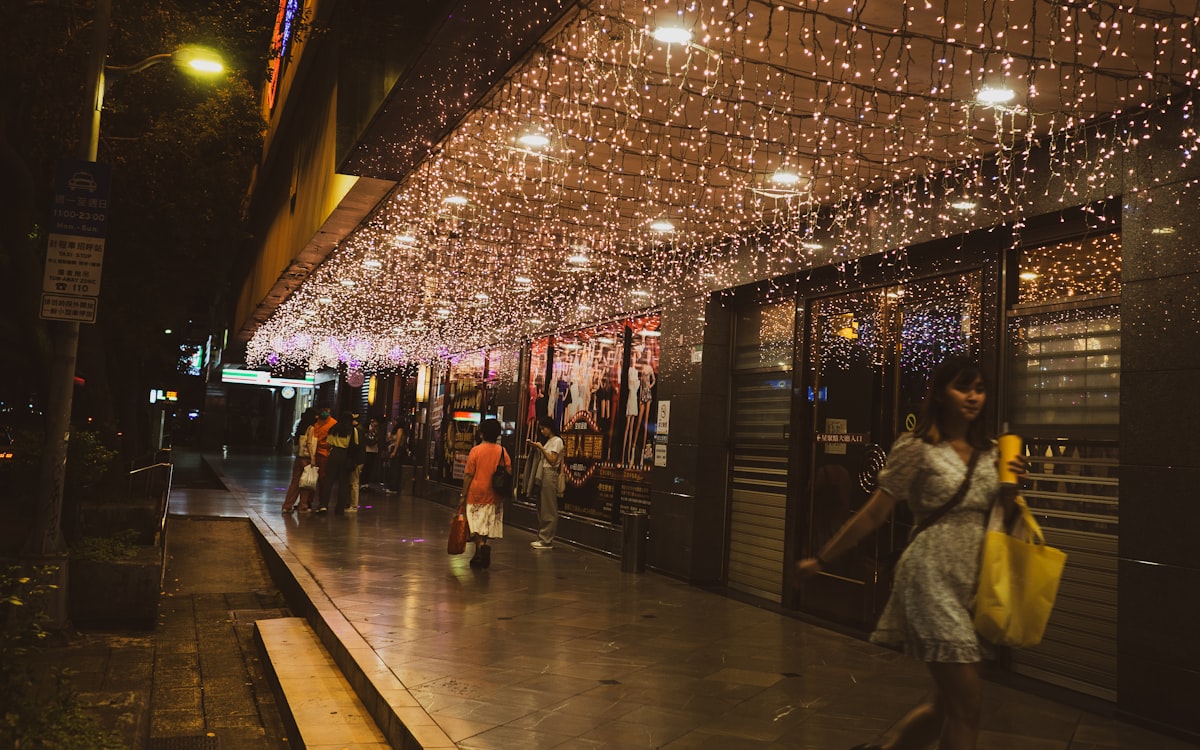
“A 10 minute walk feels better than a 10 minute stand. Even when the total time is identical.”
Operational Consequence
Everyone is trying to get cars to riders faster. I think that's the wrong question.
The core problem isn’t speed — it’s congestion. Thousands of riders in one spot create a physical bottleneck no algorithm can outrun. Drivers can’t reach a place that’s already gridlocked by other drivers doing the same thing.
Without dispersal
Drivers gridlock near the venue. Few pickups complete.
With dispersal — ideal
All riders disperse. Drivers match at the perimeter.
With dispersal — realistic
60% disperse. Dispersed riders match first; others still benefit.
The product doesn’t need universal adoption to work. Even at 60% opt-in, the spillover effect helps the riders who don’t walk.
- The bottleneck is geographic concentration, not matching speed.
- Let riders walk a short distance to pickup points where the marketplace can actually function.
- It applies the Houston Airport principle and the geography fix at the same time.
- Dispersing demand is the lever — not adding more cars to a place cars can’t reach.
Act III · The Solution
Introducing Uber Flow.
Transportation as a service for live events — a mobility operating system that makes getting to and from the biggest nights of your life as effortless as the experience itself. Today, leaving an event feels like the opposite of arriving. Standard Uber wasn’t designed for this; events need their own product line. The name is the desired state: the opposite of friction, gridlock, and jam.
Phase 1 · MVP · Year 1–2
Rider Dispersal
Riders move out of congestion; the marketplace clears. No venue partnerships needed — it generates the data that unlocks everything else.
Phase 2 · Year 2–3
Venue Partnerships
Dedicated Uber lanes, staging-area kiosks, on-site ops support. Like airports, but for events.
Phase 3 · Year 3–5
Mobility OS
Walk Mode V2 + Uber Eats, Elite concierge, shuttles, parking, and a venue ops console consolidating six vendor tools into one B2B platform.
Mobility OS is the full product family. See Long Term Vision for what’s inside each phase.
The first thing it ships is the minimum viable intervention that fixes the marketplace, requires no venue partnerships, and generates the data that unlocks everything else. Phase 1 is how Uber Flow earns the right to exist. Here’s what it looks like.
Demand Side
Walk Mode: 10 minutes of walking buys a faster, cheaper ride home.
Think Wait & Save, but Walk & Save. While everyone else stands in a dark parking lot watching their ETA climb, Walk Mode riders are already moving toward a car that’s timed to meet them.
Why Walk Mode?
Smart riders already walk away from congestion before requesting. Walk Mode turns that undocumented hack into an optimized feature with synchronized dispatch.
Who is it for?
The group coordinator from Act I — highest cognitive load, most motivation to optimize. Their adoption spills over to everyone else.
When does it appear?
Only when the pickup is inside an active event geofence and ETA/surge is meaningfully above baseline — i.e. when a walk would improve the rider's outcome.
Tap through the full rider flow:
Step 1 · Enter destination
Where to?
What you’re looking at
- Walk Mode inserts between destination entry and ride-tier selection, then flows into the standard Uber experience.
Walk Mode inserts between destination entry and ride-tier selection, then flows into the standard Uber experience.
* Mockups are for explanatory purposes only and are not POR design. Final UI would be refined through Uber’s design system and user testing.
Slider defaults are set by the algorithm
Accounting for walking conditions, venue layout, congestion, and weather — riders can always override.
Bailout is always one tap away
One button brings the car to the rider’s current location. No penalty, no guilt. Riders can drag the pickup pin to override. After dismissing the offer several times, Walk Mode is suppressed for the session.
Addressing the objection — what about riders who won’t walk?
Worst wait vs. best wait
Walking with purpose beats standing still watching a 42-min ETA.
Even partial opt-in wins
20% adoption clears enough congestion to help the other 80%.
The behavior already exists
Documented in consumer tips, driver forums, and Uber's own tests.
Uber Flow is opt-in, never default. It doesn’t need universal adoption — it needs marginal adoption.
Walk Mode V2 — ships if V1 succeeds
While you walk, your driver picks up your food.
- Add a food or drink order while walking to your pickup point.
- Only surfaces places on the driver’s route, so the order is ready when you get in the car.
- Event drop-offs too: get dropped off near the venue and walk in, choosing your comfort distance. The logic reverses. Riders already do this, and patience is higher on arrival.
You walk
Heading to pickup
You order
Nearby spots only
Driver grabs
On route to you
You get in
Food is waiting
Turns a walk into a served experience. Waiting becomes productive, not wasted.
Similar primitives already exist in the Uber ecosystem
- Uber Pickup and Go lets riders grab items during their trip
- Airport riders are already engaged with Uber Eats prompts after pickup
V1 catalog: essentials people want after events
Second-order effect: each Eats order lifts driver earnings per trip, and Eats drivers near venues start taking rideshare trips — expanding car supply exactly where it’s short.
Supply Side
Walk Mode fits naturally into the platform drivers already use.
Nothing about the driver’s core workflow changes. The rides just get better.
“Walk a short distance: If app shows long waits, walking 3 to 10 minutes to a less congested pickup spot can drastically reduce wait time and cost. Move to the venue's designated rideshare pickup or staging area, it's the fastest and safest place drivers can access.”
“Smart riders already do this. The problem is most riders are not smart.”
Uber Flow badge on Opportunities
The Flow badge tells drivers these riders are walking to them. No fighting into the venue.
FRE education for Flow events
Lightweight onboarding explains what Flow means: better pickups, faster completions, Boost+ incentives.
Boost+ at pickup corridors
Targeted bonuses for drivers accepting Flow rides at designated pickup points.
Heatmap & demand shift outward
Demand disperses to streets drivers can actually reach, at prices reflecting real demand.
Extensible to an AV fleet
Walk Mode decouples pickup from the venue, so the same corridor + dispatch logic works for a human or an autonomous vehicle.
Everything surfaces through the Opportunities tab and heatmap drivers already use — Walk Mode just moves demand outward, to streets drivers can actually reach, with more rides exactly where they want to be.
Operational Layer
The product runs through ops, not around it.
Walk Mode geofences are operationally configured per event by the city ops team. Ops aren’t just monitoring — they’re co-authors of the product experience, each event with a designated lead and a small set of real-time levers.
Geofence boundary
Drawn per event from venue knowledge. Adjustable in real time as congestion shifts.
Slider defaults
Shorter for stadiums with dense streets; longer for festivals with open access roads.
Driver incentives
Targeted Boost+ bonuses to drivers at specific endpoints when supply runs short.
Kill switch
Disable Walk Mode entirely if conditions become unsafe. Riders fall back to standard pickup.
Without ops, Walk Mode is an algorithm guessing at venue boundaries. With ops, it adapts to each event in real time.
Act IV · Validation
The pilot I'd run: Austin.
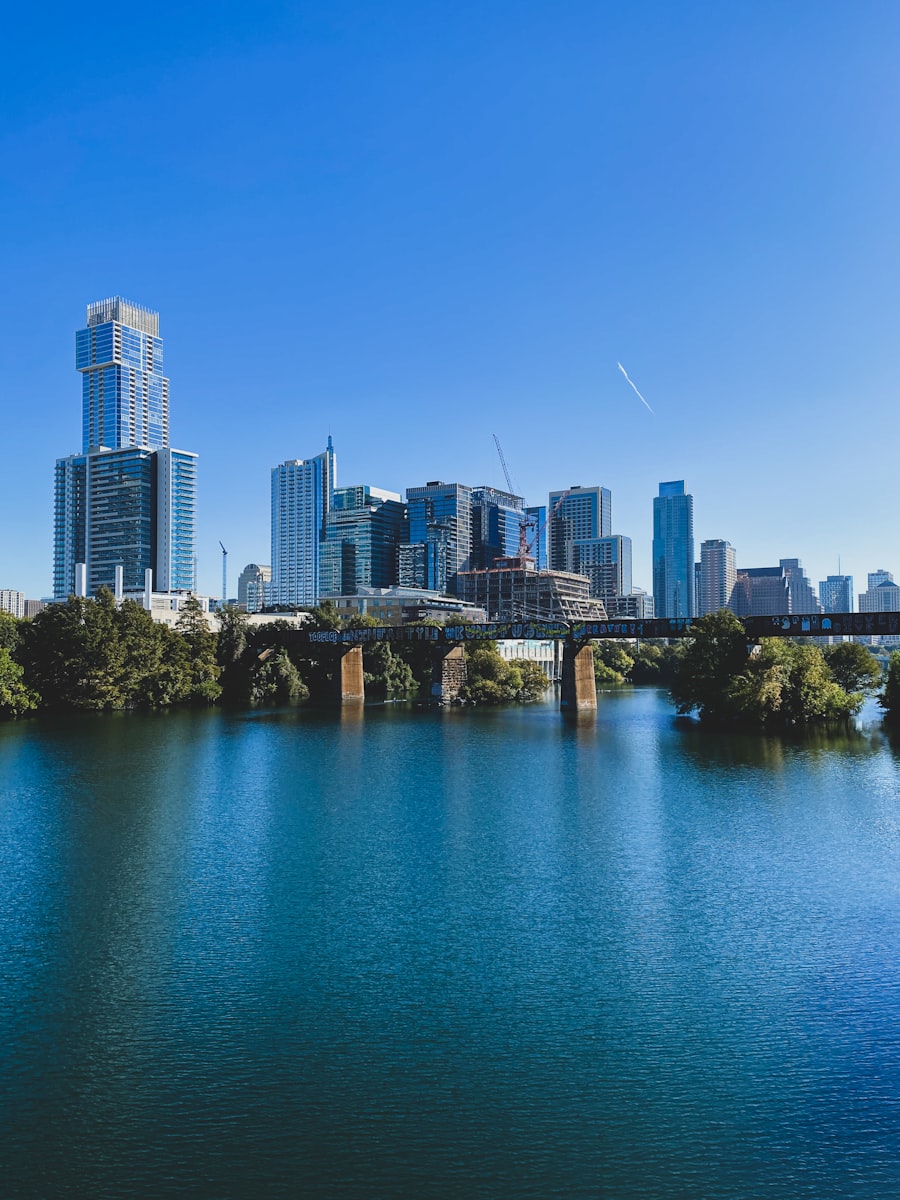
Why urban first?
If Walk Mode breaks at a stadium, riders fall back to standard Uber on a working grid. If it breaks at Coachella at 2 AM, they’re stranded. De-risk where the downside is contained.
Why Austin?
Five distinct event types in one market, and weak public transit — so Walk Mode gets measured against the real user choice, not a competing subway.
ACL Festival · Wknd 1
75K daily, Zilker Park
ACL Festival · Wknd 2
A/B test against Wknd 1
UT Football vs. A&M
Urban stadium, 100K
Moody Center Concert
Urban arena, 15K, late night
Round Rock Express
Daytime, 7K — deliberate floor
COTA F1 Weekend
Remote venue, premium audience
Event 05 is a deliberate floor test — Walk Mode should underperform there. The pilot tests boundary conditions, not just wins. Cluster randomization at the event level (not user A/B), because Walk Mode improves wait times for everyone in the geofence.
Measurement
How I'd know it's working.
Scenario: toggle to see how each metric should move
What you'd expect to see if the product is working.
North star
# of trips started in event geofence during the egress window
Are more people getting rides home after events? This only goes up when riders request, drivers show up, and trips actually finish.
Rider & driver satisfaction
Event-specific scores + qualitative feedback on pickup, walk, and overall trip.
Unique drivers in event egress
Distinct drivers accepting ≥1 ride in the geofence — measures willingness to serve events.
Median book → pickup time
Should fall as congestion clears and drivers can actually reach riders.
Topline business
GMV from event egress
Total dollar value of all rides started in event geofences during egress.
Topline business
Uber revenue from event egress
The portion of GMV that becomes revenue after driver payouts and incentives.
Auxiliary metrics
Walk Mode opt in rate
What % of riders shown Walk Mode choose to use it.
Walk completion rate
Of those who start walking, how many finish and get picked up.
Wait time for non Walk riders
Does clearing congestion help riders who didn't opt in too.
Pre pickup cancellation rate
Are fewer riders giving up before the car arrives.
Driver earnings per hour
Are drivers making more money per hour at events.
Ride booking completion rate
Percentage of riders who complete the full booking flow including the Walk Mode step. Ensures the additional step does not cause riders to drop off before confirming their ride.
Qualitative rider feedback — especially on the pickup and drop-off experience — rounds out these quantitative signals.
An important auxiliary metric is wait time for non Walk riders. If it doesn’t improve, the spillover hypothesis might be incorrect.
Long-Term Vision
Walk Mode is the wedge. Uber Flow is the destination.
“Make every journey to and from a live event feel simple, magical, and invisible. Uber Flow is the operating system for event mobility: one seamless layer that moves tens of thousands of people all at once.”
A strategic spread, not a single product: the economical end is Walk Mode (high volume, low cost, fixes the core breakdown); the premium end is code pickup at venues and Blacklane-powered Elite concierge for VIPs and artists.
Each phase earns the next. Walk Mode generates the only real-time dataset of event egress that exists; that data earns venue conversations; partnerships earn infrastructure; infrastructure earns Mobility OS.
The pain is real and documented
What Mobility OS looks like
Each component depends on venue partnerships earned through Walk Mode at scale. None ship in MVP. All become possible because of it.
Why venues want this: they have no real-time visibility into how attendees leave. Uber Flow generates that data as a byproduct of the rider product.
Venue Mobility Console
One dashboard replacing six vendor tools — pre-event planning, live ops map, intervention controls, post-event reporting, shuttle/parking coordination.
Uber Elite
Premium · Pre booked
Uber Elite / Concierge
Built on the Blacklane acquisition: white-glove pre-booked rides for VIPs and artists — dedicated exit lanes, priority matching, zero surge, catering to the luxury market that expects a seamless, concierge level experience.
Shuttle Network
High-capacity vehicles on fixed venue→hub routes. Only viable with venue partnerships granting dedicated lanes.
Parking Operations
Built on SpotHero: manage venue parking in the same layer — driver staging zones, VIP reservations, real-time capacity tied to egress.
Risks & Mitigation
Pitfalls to watch out for.
Riders refuse to walk
Valuable even at 15–20% opt-in because of spillover. Below 15%, I'd kill or rescope.
Just-in-time matching fails to sync
Generous safety buffer, continuous pace estimation, and a bailout button always visible.
Walking conditions become unsafe
Ops has real-time tooling to disable Walk Mode, close corridors, or shrink slider defaults.
Walking UX annoys repeat riders
Dismiss the offer and tap “Don't show Uber Flow” to suppress it for the session. A non-intrusive prompt on the confirmation screen lets them re-enable it at any time.
Appendix
Frequently asked questions.
You’ve arrived at your destination.
How was the ride?